
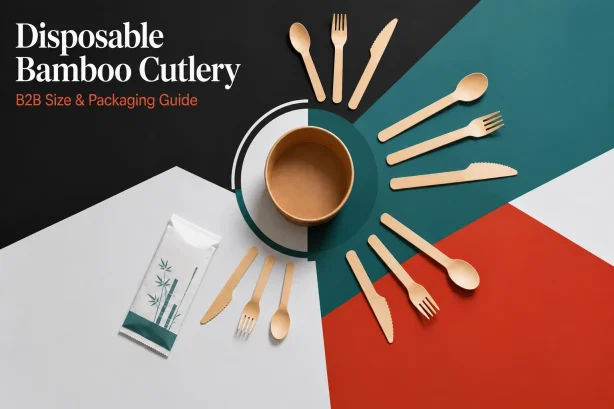
Quick answer: For most takeaway meals, catering programs, and full-service meal kits, 170 mm disposable bamboo cutlery gives adults a more comfortable grip and works with a wider range of foods. A 140 mm format saves carton space and can suit desserts, tasting portions, airline trays, and compact meal kits. Choose loose bulk pieces when local packing and unit cost matter most. Choose kraft-wrapped sets when hygiene, convenience, or private-label presentation matters more. Before ordering, test the fork, knife, and spoon with your actual menu and confirm dimensions, smoothness, moisture control, packaging materials, food-contact documents, and environmental claims.
Disposable bamboo cutlery looks like a simple product until a buyer has to specify it. A fork that performs well with salad may struggle with roasted vegetables. A compact spoon may fit an airline tray but feel awkward with a full takeaway meal. Kraft wrapping can improve presentation, yet it also changes carton volume, packing labor, and the claims printed on the finished pack.
Those details matter because the buyer is not only choosing a material. The buyer is choosing a utensil format, a packing system, and a customer experience. This guide explains how foodservice distributors, restaurant groups, caterers, airlines, and private-label brands can compare disposable bamboo cutlery before placing a wholesale order.
Why Disposable Bamboo Cutlery Is a Useful Sourcing Category
Bamboo cutlery occupies a practical middle ground in disposable foodservice. It has a natural appearance, stays rigid with hot or cold food, and avoids the softening or melting behavior associated with some alternative utensils. It is often chosen for premium takeaway, events, hotels, airline catering, and brands that want the utensil to support a plant-based packaging program.
That does not make every bamboo fork or spoon equivalent. Species, sheet or strip thickness, drying, forming, polishing, sorting, and storage all affect the finished result. Buyers should treat the category as a manufactured food-contact product, not as an unprocessed piece of bamboo.
BambooSaint supplies both bulk bamboo knives, forks, and spoons and kraft-wrapped bamboo cutlery sets in 140 mm and 170 mm sizes. These two formats cover different operating needs, so price per piece should not be the only comparison.
Start with the Meal, Not the Catalog
The right specification begins with what the utensil must do. A buyer supplying soup, steak, salad, dessert, and airline meals may need more than one format. The table below is a practical starting point, but samples should still be tested with the actual food.
| Use case | Practical starting format | What to test |
|---|---|---|
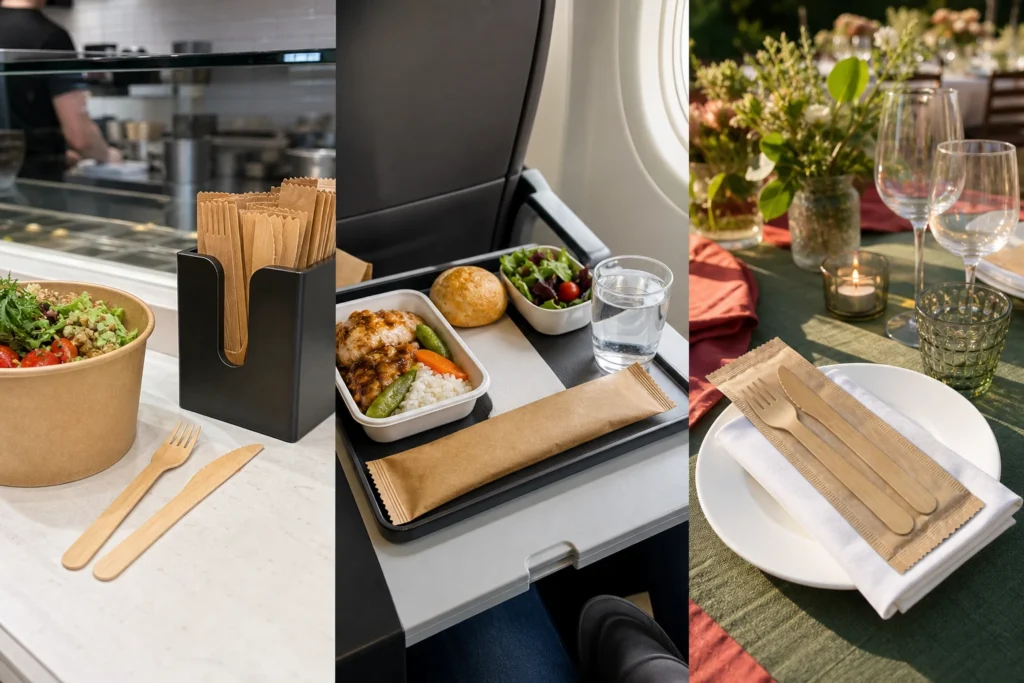
| Takeaway and delivery meals | 170 mm fork, knife, and spoon in a wrapped set | Grip, knife cutting, fork tine strength, wrapper seal, and napkin size |
| Airline or compact meal trays | 140 mm compact set, with components selected to match the menu | Tray fit, pack thickness, weight, and handling in limited space |
| Catering and events | 170 mm loose pieces or wrapped sets | Performance across the full menu and speed of table setup |
| Desserts and tasting portions | 140 mm spoon or fork, often packed loose | Bowl depth, edge feel, and portion compatibility |
| Distributor or local repacking | Separate bulk cartons of forks, knives, and spoons | Count accuracy, inner bags, carton strength, and batch consistency |
140 mm vs 170 mm Bamboo Cutlery
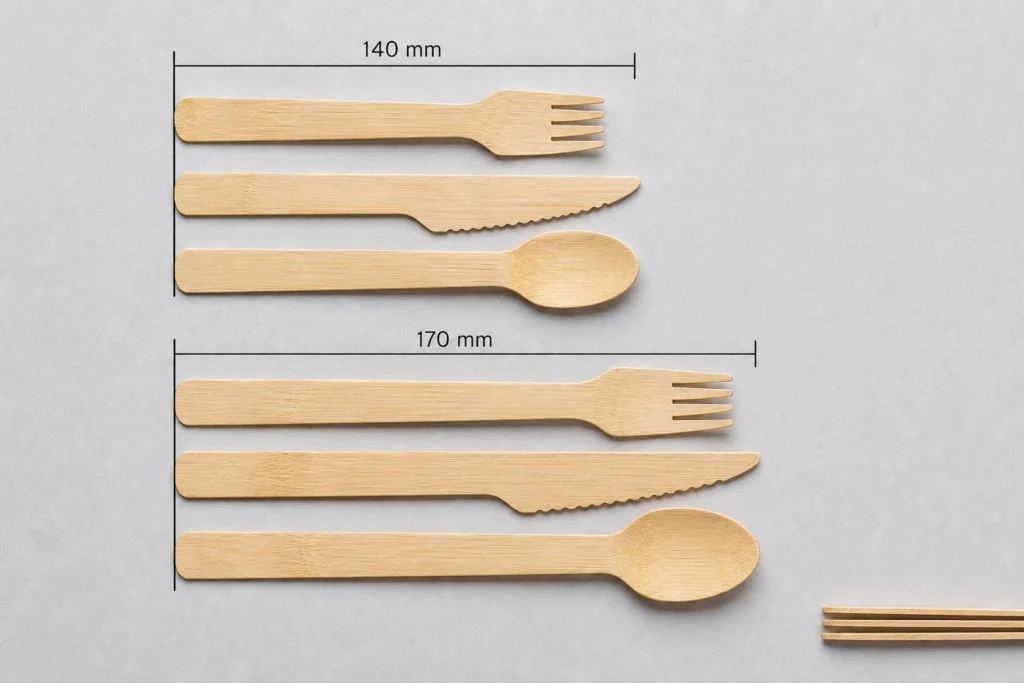
Length changes more than hand feel. It affects material usage, wrapper dimensions, carton efficiency, and how the utensil sits beside a tray or inside a meal kit.
When 140 mm Works Well
A 140 mm utensil is compact and efficient. It can suit desserts, samples, children’s portions, airline service, and meal trays with limited space. It may also reduce pack volume. The tradeoff is leverage: adults eating dense food or a full main course may find the shorter handle less comfortable.
When 170 mm Is the Safer Default
For general foodservice, 170 mm is usually the more versatile starting point. The longer handle feels closer to conventional cutlery and gives better reach in bowls and takeaway containers. It is a sensible sample size for restaurant meals, catering, hotels, and retail foodservice packs.
Loose Bulk Pieces or Individually Wrapped Sets?
Loose Bulk Cutlery
Bulk cartons normally have the lowest packing cost and use less secondary material. They suit distributors, caterers, and brands that pack locally or place utensils in self-service dispensers. However, the importer takes on more handling, hygiene control, and possibly local assembly.
Wrapped Bamboo Cutlery Sets
A wrapped set arrives ready for a meal tray, delivery bag, hotel room, or event table. The sleeve can carry a logo, disposal instructions, or product information, and the pack can include a napkin or toothpick. Buyers should check whether every component supports the intended claim. A bamboo fork inside a plastic film wrapper is not a plastic-free pack.
For private-label programs, review BambooSaint’s options for custom retail packaging and logos. Artwork approval should cover color, text size, barcode placement, certification marks, country-of-origin wording, and the final material structure of the wrapper.
Choose the Components Instead of Defaulting to a Three-Piece Set
A fork, knife, spoon, napkin, and toothpick in every pack may look complete, but unused components add cost and waste. Build the set around the menu.
- Fork only: salads, pasta, fruit, and many event menus.
- Fork and knife: plated meals, grilled foods, and firmer takeaway dishes.
- Spoon only: soup, rice dishes, desserts, yogurt, and soft foods.
- Fork, knife, and spoon: mixed menus where the exact meal is not known when packs are distributed.
- Napkin or toothpick: add only when the service format needs it and the packaging can identify the components accurately.
This component-level approach also improves forecasting. A distributor may sell more forks than knives, while a soup program may need no fork at all. Separate demand planning can reduce leftover stock.
Quality Checks That Affect Real Foodservice Performance
A visually attractive utensil can still fail in use. Ask the supplier to define inspection methods and acceptance criteria for the following points.
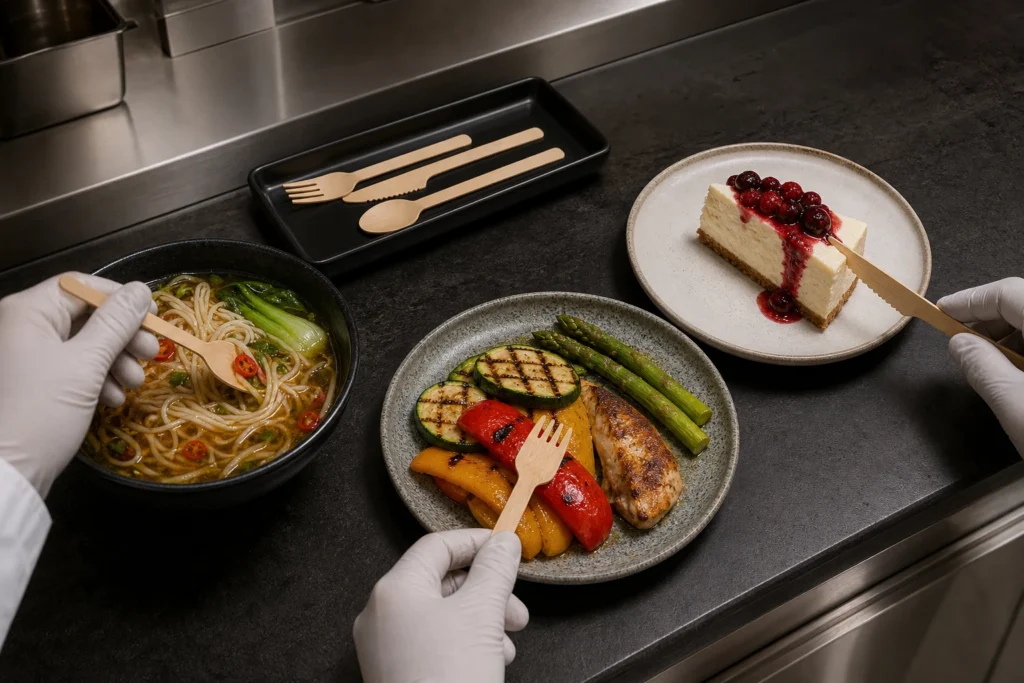
- Edge and surface finish. Run a gloved hand along handles, spoon rims, fork tines, and knife serrations. Look for splinters, burrs, fiber lift, dust, and sharp corners. BambooSaint explains its approach to a splinter-free finish, including processing, polishing, sorting, and dimensional control.
- Functional strength. Test forks with firm food, knives with the toughest realistic menu item, and spoons with hot soup or dense dessert. Record bending, breakage, tine damage, and user comfort.
- Moisture and storage stability. Excess moisture can contribute to odor, staining, mold risk, or dimensional change during storage. Ask how moisture is controlled before packing and how cartons should be stored.
- Odor and taste. Open samples after they have remained sealed, then check for strong material, ink, adhesive, or packaging odors. Test with neutral food so off-notes are easier to detect.
- Pack and carton consistency. Check seals, counts, print alignment, inner packing, carton dimensions, compression strength, pallet pattern, and shipping marks.
Documents and Environmental Claims Need Separate Checks
Food-contact documents should match the destination market, product, material, and current production scope. Do not accept a certificate simply because the supplier’s name appears on it. Check the issuing body, report number, dates, tested item, standard, and whether the report covers the exact utensil and any printing or packaging that touches food. BambooSaint’s FSC, LFGB, and FDA documentation overview outlines why these records matter for procurement and customs review.
FSC claims require traceability. The Forest Stewardship Council explains that Chain of Custody certification tracks eligible material through processing and distribution. Buyers who want an FSC claim on finished packs should verify the certificate scope, claim wording, supplier status, and trademark approval rather than relying on a logo file.
Compostable and biodegradable are not interchangeable marketing words. The U.S. Federal Trade Commission’s Green Guides say compostable claims need reliable evidence and may need qualification when appropriate facilities are not widely available. Claims should cover the complete item being advertised, including the wrapper, ink, adhesive, napkin, and other components when the claim refers to the entire pack.
Compare Landed Cost, Not Only the Factory Unit Price
The lowest quotation can become expensive after packing and logistics are included. Compare suppliers on the same basis:
- price per piece or per completed set;
- pieces per inner bag, carton, and pallet;
- carton dimensions, gross weight, and container utilization;
- printing plates, artwork, sample, and testing fees;
- inspection, freight, duty, and destination charges;
- defect allowance, replacement terms, and the cost of local repacking.
Wrapped sets often cost more at origin but can remove local assembly work. Bulk pieces can be more economical when an importer already has packing capacity. The better option depends on the whole operation.
A Practical Sample Approval Method
A supplier sample should become a measurable reference, not just a courier package that someone says looks good.
- Request the proposed production specification, packaging layout, and relevant documents with the samples.
- Test each utensil with the actual menu at normal serving temperatures.
- Measure a representative group for length, width, and thickness variation.
- Inspect edges, tines, serrations, color, odor, and wrapper seals under consistent lighting.
- Keep signed reference samples and approved artwork for comparison with mass production.
- Confirm the pre-shipment inspection plan, acceptable quality limits, count method, and corrective action before the purchase order is finalized.
Buyers can review BambooSaint’s product sample process and customization options before preparing an RFQ.
What to Include in a Disposable Bamboo Cutlery RFQ
- utensil type and set combination;
- 140 mm, 170 mm, or custom dimensions;
- expected order quantity and annual demand;
- loose bulk, individually wrapped, or retail-ready packing;
- napkin, toothpick, and wrapper material requirements;
- logo, colors, barcode, and carton marks;
- destination country and required food-contact documents;
- FSC or other sourcing claim requirements;
- target delivery date, Incoterm, port, and inspection method.
FAQs
What Size Disposable Bamboo Cutlery Should a Restaurant Choose?
For full takeaway meals and general restaurant use, 170 mm is a practical starting point because it offers a familiar grip. A 140 mm format is better suited to desserts, tasting portions, compact trays, and applications where pack size matters. Test both when the menu includes dense or difficult-to-cut food.
Is Bamboo Cutlery Suitable for Hot Food?
Properly manufactured bamboo cutlery can be used with many hot-food applications because it does not melt like conventional plastic. The buyer should still test strength, odor, taste, and surface behavior at the actual serving temperature and contact time.
Are Wrapped Bamboo Cutlery Sets Always Plastic-Free?
No. The utensil may be bamboo while the wrapper, window, coating, adhesive, or other component contains plastic. Ask for the complete material specification and approve any environmental wording against the finished pack.
Can Bamboo Cutlery Carry a Custom Logo?
Branding is usually applied to the kraft sleeve, retail pack, or carton. Depending on the utensil and artwork, direct marking may also be possible. Confirm print method, food-contact position, artwork tolerance, color standard, and minimum order quantity with the supplier.
What Documents Should a Wholesale Buyer Request?
Request food-contact reports relevant to the destination market, product specifications, packaging material details, supplier and factory information, and any certification needed for a marketing claim. Verify scope, validity, item description, and issuing body. Requirements vary by market, so the importer should confirm them with its compliance adviser.
Final Buying Recommendation
For a new foodservice program, begin with 170 mm samples in the exact fork, knife, spoon, and wrapping combination you expect to buy. Add a 140 mm option only where tray space, dessert portions, or carton efficiency justify the shorter format. Test the samples with real food, lock the specification and artwork, then compare landed cost and inspection terms.
To discuss loose bulk cutlery, kraft-wrapped sets, private-label packing, or sample requirements, contact BambooSaint with your utensil combination, size, quantity, destination market, and target delivery date.